
Quick answers about your medication, dosage, injections, storage, shipping and refills.
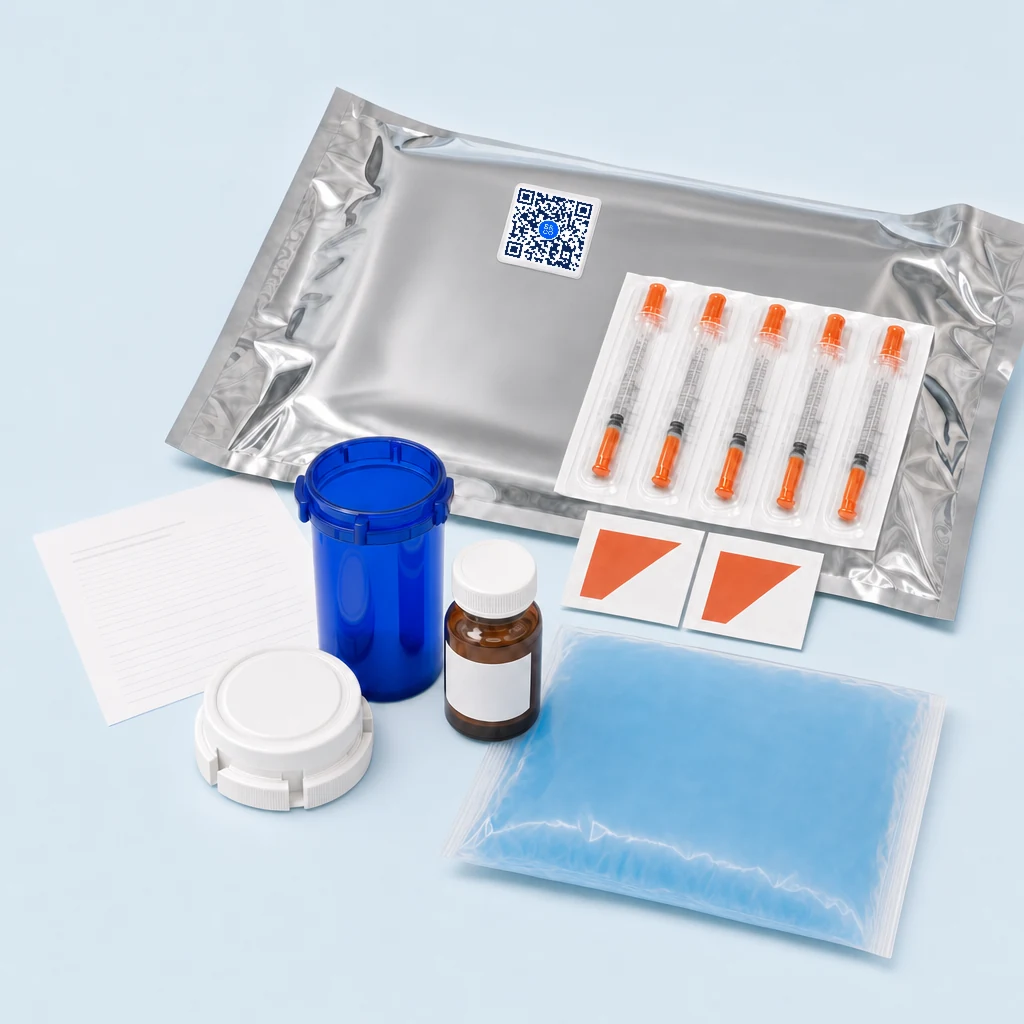
It’s normal for your medication to arrive warm or with cold packs that are no longer frozen or cold. This does not mean your medication has been compromised.
Brief temperature changes during shipping are expected and do not affect the medication. The cold packs help protect your medication during the warmest parts of transit and are not necessarily expected to remain frozen or ice-cold until delivery.
Your medication is safe to use as directed.
GLP-1 medications are not denatured by normal temperatures. They break down in your body through enzymes. The goal of temperature controlled storage is to minimize changes in the solution.
After receiving the medication, place it in your refrigerator, not in the door, to avoid unnecessary temperature changes.
If your shipment took longer than 4 days (because of shipping delays, or because it sat in a non refrigerated locker), don’t take it. Reach out to support through the patient portal and we’ll help you with a replacement.
If your medication has frozen, don’t take it. Keep it in the refrigerator, never the freezer.
If the medication looks thick, has floating particles or starts to gel, don’t take it. Contact support through the patient portal.
Once it’s past the beyond use date (BUD) on the prescription bottle or vial, discard what’s left and contact support if you need more before your next order.
Follow the storage instructions on your prescription and pharmacy materials.
Inspect the vial the way your pharmacy instructions describe.
Still unsure? Contact our care team before you use it.
Amber glass gives your medication an extra layer of protection from light. It filters more UV and short wavelength visible light than clear glass, while it’s stored and every time you handle it.
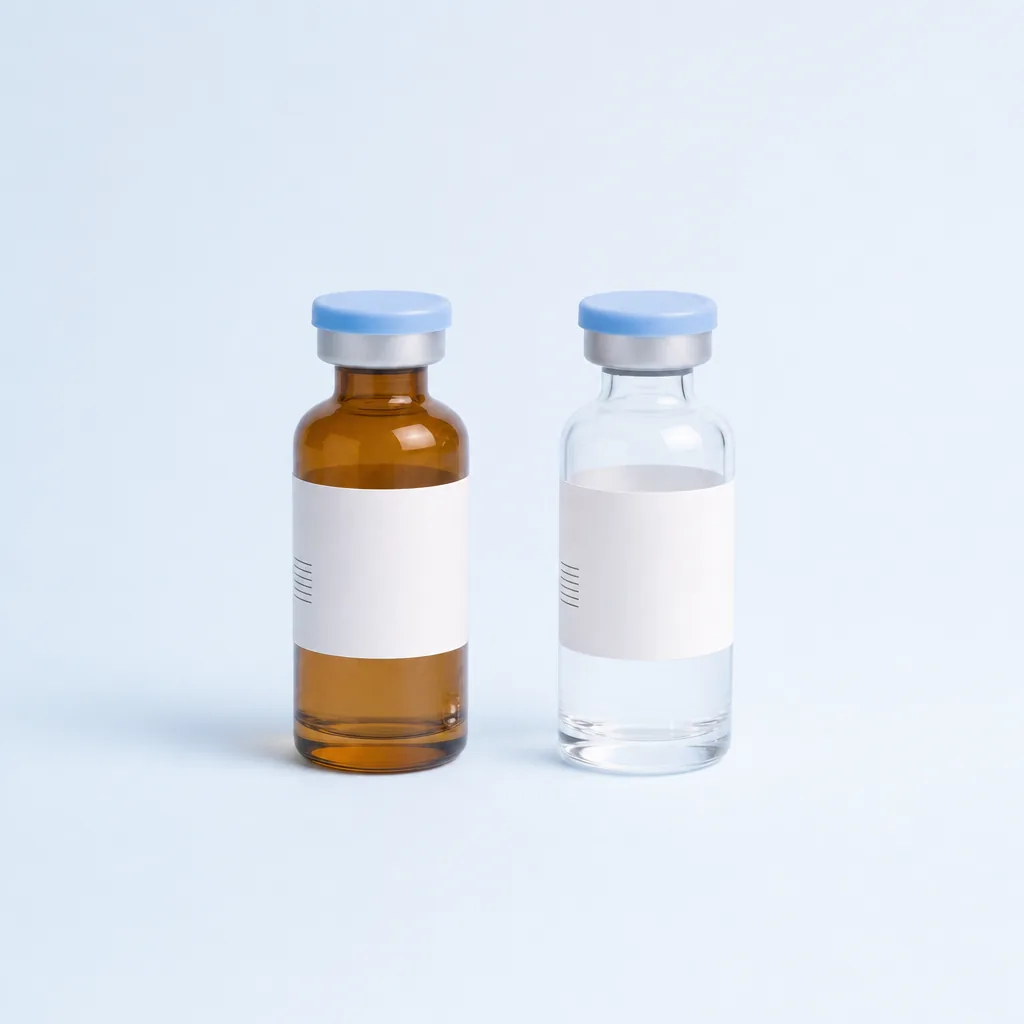
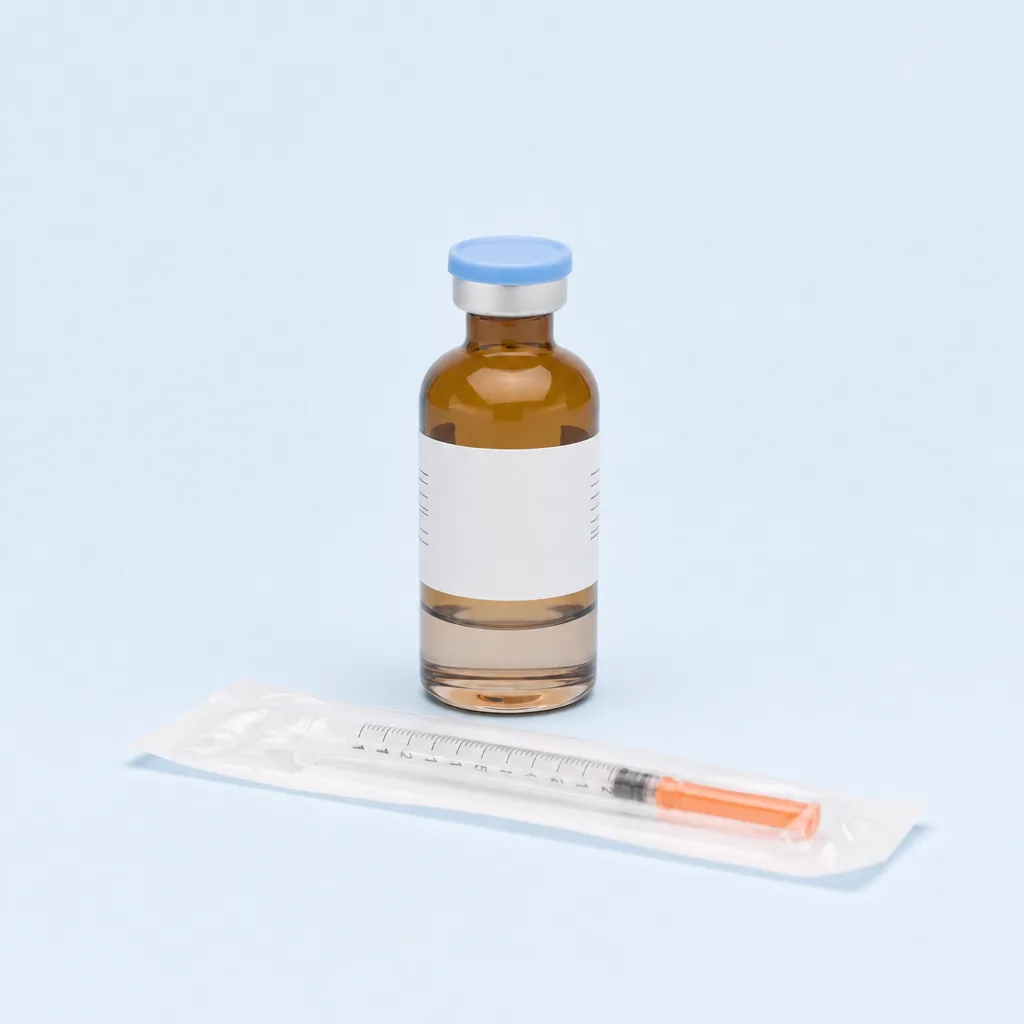
The size of the vial doesn’t tell you how much medication is inside. Your vial can hold your full prescribed quantity and still have plenty of empty space above the liquid. That’s normal.
Compounded medications can come in different concentrations, so your prescription label is the one source for your dose.
Always follow the dosage instructions on your prescription label and the instructions from your healthcare provider and pharmacy.
No. Milligrams measure the medication. Units measure the volume you draw into the syringe, and 100 units equals 1 mL. How they line up depends on the concentration, which is why you follow your label exactly.
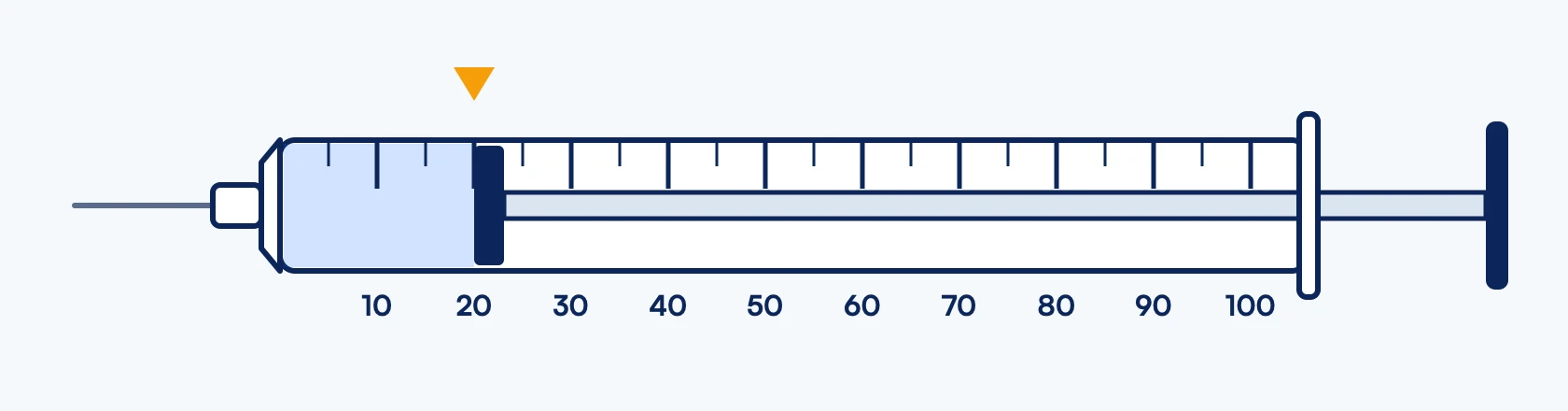
Example: a syringe drawn to 20 units (0.2 mL).
Four steps, once a week.
Wash your hands and wipe the top of the vial with an alcohol swab.
Draw your prescribed dose into the syringe, exactly as your label shows.
Inject into the fatty tissue of your belly, thigh or upper arm.
Put the used syringe straight into a sharps container.
Same day, every week. Pick one that’s easy to remember.
Your pharmacy materials give the exact storage range for your prescription. Here’s how it works day to day.
Everyone’s timing is different. Here’s what’s normal in the first weeks.
General diet advice should be flipped for a GLP-1. Since your stomach will empty at a slower rate than normal, you don’t need to fill up. Start with protein first every day. You don’t need to order a salad, or drink water right before a meal (though you should keep water intake high to help with side effects).
It’s important to get the biggest building blocks of nutrition every day, and the portion control should take care of itself. If you want to snack, try to do it after a high protein meal. It’s easy to “fill up” on snacks and end up full without getting enough nutrients each day. That’s where people start to see worse long term effects.
Taking any of these? Your provider or pharmacist should check how they fit with your treatment. Don’t start, stop or change anything without asking first.
Don’t rely on the general FAQ. Contact our medical team promptly for guidance specific to you.
If you have severe symptoms or think it’s an emergency, call 911. You can also reach Poison Control any time at (800) 222 1222.
Your plan keeps running in the background. Here’s how refills, dose changes and pauses work.